
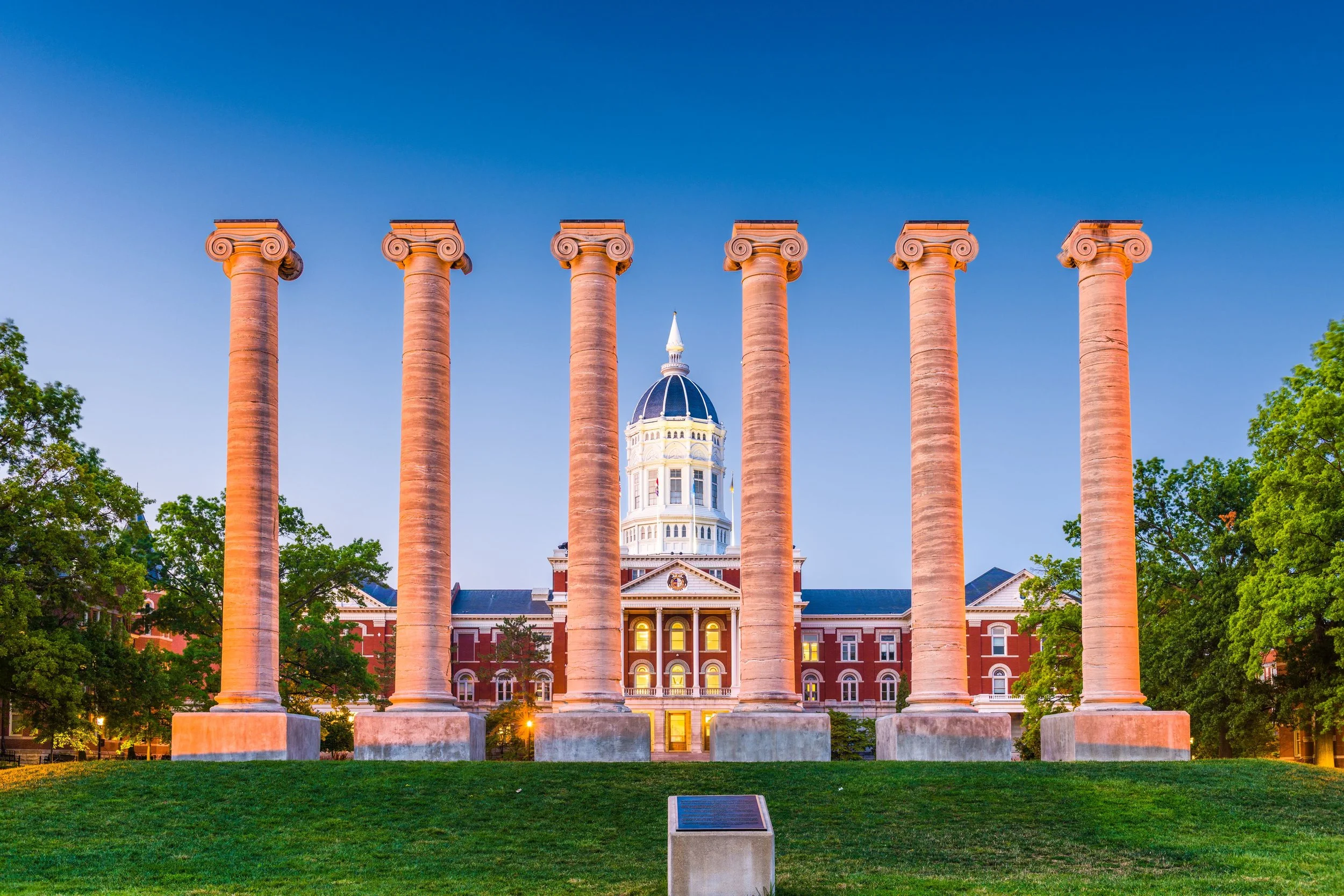
University of Missouri
System Retirement Plans
A Comprehensive Guide for Faculty, Administration & Healthcare Employees
Convergence Wealth has been serving Mizzou faculty and staff in Columbia, MO for the last decade. So we understand how crucial it is for faculty, administration, and healthcare employees to navigate their University of Missouri Retirement Plans wisely. As a financial advisor for many Mizzou employees, we know that the UM System offers robust retirement benefits that can help secure your financial future—but only if you fully understand how to use them. This guide provides an authoritative overview of the core pension and retirement plans (based on your hire date and position) and the voluntary supplemental plans available to faculty and staff, including those in the University of Missouri Health Care system. We’ll also cover strategies for both active employees and those approaching retirement, and highlight key topics for further exploration.
Table of Contents
Core Retirement Plans (Defined Contribution, Defined Benefit, Hybrid)
Voluntary Retirement Plans (401(a), 403(b), 457)
Can University of Missouri Employees Contribute to Both a 403(b) and a 457 Plan?
Retirement Planning for Employees - both Active and Nearing Retirement
Should I Choose the Pension or the Defined Contribution Plan?
Prefer PDF? Share your e-mail address and we’ll send you a printable copy
Overview of UM System Retirement Benefits
The University of Missouri System provides a unified retirement program for benefit-eligible employees across all its campuses and MU Health Care. This means that whether you are faculty on the Columbia campus or a healthcare worker at MU Health Care, your core retirement plan is determined primarily by your hire date (or rehire date) and falls into one of three categories: a Defined Contribution (DC) Plan, a Hybrid Plan, or a Defined Benefit (DB) Pension Plan. In addition to these core plans, all employees – even those not eligible for other benefits or working part-time – may participate in the voluntary retirement savings plans such as 403(b) and 457(b) accounts. Benefit-eligible employees have further access to a Supplemental Retirement Plan (SRP 401a) for additional tax-deferred savings. In short, the UM System’s retirement program is a combination of mandatory core benefits and optional supplemental plans designed to help you build a secure retirement.
In summary: Your specific “core” retirement plan is determined by when you joined the UM System as a benefit-eligible employee. Understanding which plan you have is the first step to making informed decisions about retirement. Let’s break down each core plan and what it means for you.
Core Retirement Plans by Hire Date
1. Defined Contribution (DC) Plan – For Hires on or after Oct. 1, 2019
The Defined Contribution Plan is the newest retirement program, covering faculty and staff first hired (or rehired) on or after October 1, 2019. In a DC plan, the university contributes to an individual retirement account for you, and your retirement benefit depends on the account’s investment performance rather than a pension formula. Key features of the UM System’s DC Plan include:
Automatic Employee Contributions: You are automatically enrolled to defer 8% of your salary into the retirement plan, though you can change this percentage at any time. (Employees who switched from a prior plan during a one-time opt-in had a slightly different split – e.g. 6% voluntary + 2% mandatory.)
Dollar-for-Dollar Employer Match: The University matches 100% of your contributions up to 8% of pay, effectively doubling your savings. If you contribute the full 8%, you get an 8% of salary match from UM, making a total of 16% of your pay going toward retirement each pay period. This is a very generous match – for every dollar you put in (up to 8% of pay), the University puts in a dollar as well. The plan’s design encourages a total savings rate around 15% or more of your salary for a secure retirement.
Vesting Period: University contributions in the DC plan vest after 3 years of service. “Vesting” means you gain ownership of the employer’s match – if you leave UM employment before hitting 3 years, you would forfeit the matching contributions (your own contributions are always yours).
Investment Options: Contributions (yours and the match) go into an investment account in your name. You can choose from a range of funds (administered by Fidelity Investments via the NetBenefits platform) to invest your DC plan money according to your goals and risk tolerance.
Retirement Benefit: At retirement or separation, your benefit is simply the account balance (your contributions + matches + investment gains/losses). There is no fixed pension income with this plan; instead, you have flexibility to take withdrawals, roll the balance into an IRA, or purchase an annuity, etc. The amount available depends on how much was contributed and how well investments performed over your career.
Why it matters: If you are a newer employee under the DC plan, maximizing that 8% contribution to get the full 8% match is crucial. Contributing less means leaving free money on the table. For example, contributing the full 8% triggers the 8% match – a 100% return on your contribution immediately. Over time, these matched contributions plus investment growth can compound significantly. We at Convergence Wealth often advise DC plan participants to contribute at least the matched amount and consider investing even more through the supplemental 403(b)/457(b) plans if possible.
2. Hybrid Plan (Employee Retirement Investment Plan) – For Hires Oct. 1, 2012 to Sept. 30, 2019
The Hybrid Plan was introduced for employees hired from late 2012 through September 2019. As the name implies, it’s a combination of a traditional pension (defined benefit portion) and a defined contribution portion. This plan aimed to share retirement funding responsibility between the University and employees. Key features of the Hybrid Plan include:
Defined Benefit (Pension) Component: Part of your retirement benefit is a pension payable for life, based on a formula. The pension formula in the hybrid is similar to the older DB plan: it uses your years of service and average pay. (The prior plan guaranteed 2.2% of average salary per year of service, and the hybrid continued to provide a pension, though with cost-sharing by employees.) As a Hybrid Plan member, you contribute a small percentage of your salary toward the pension: 1% on your first $50,000 of pay and 2% on pay above $50,000 each year. The University funds the rest of the pension benefit. You vest in the pension after 5 years of service, meaning you become eligible to receive a lifelong monthly benefit at retirement age based on the formula. (If you leave UM before 5 years, you can withdraw your own pension contributions but won’t receive a pension.)
Defined Contribution Component: In addition to the pension, the University contributes to a defined contribution account for you as part of the Hybrid Plan. Specifically, the University contributes an automatic 2% of your salary to a 401(a) account (the Supplemental Retirement Plan) each pay period. This is often called a “nonelective” contribution – you get it regardless of whether you contribute yourself. On top of that, the University will match your voluntary contributions dollar-for-dollar up to another 3% of pay if you contribute to the 457(b) deferred compensation plan. In other words, if you defer 3% of your salary into the 457(b), the University adds a matching 3% into your 401(a) DC account, plus the automatic 2%. That totals 5% of salary in University contributions (2% base + 3% match) going into your investment account, on top of your pension benefits.
Employee Voluntary Contributions: To get the full match under the Hybrid’s DC component, you are expected to contribute at least 3% of pay into the 457(b) plan (this is separate from your mandatory 1-2% into the pension). It’s important to note:you must contribute to the 457(b) to receive the matching contributions under the Hybrid Plan. If you don’t contribute, you’ll miss out on that additional 3% University match. You also have the option to contribute more than 3% (up to IRS limits) in the 457(b) or 403(b) for extra savings, but 3% is the threshold to maximize the University match in the hybrid.
Vesting: The pension portion vests after 5 years (standard for UM pensions), and the DC portion vests after 3 years of service. If you leave UM employment before 3 years, you would forfeit the 2% contributions and any match credits (though your own 457(b) contributions are always yours). If you leave after 3+ years but before 5, you keep the DC account (vested) and can either leave or roll it over, and you’d also be eligible for a deferred pension once you reach retirement age since you’d likely be vested in the pension by then.
Retirement Benefit: At retirement, a hybrid plan member will receive two streams: (1) a monthly pension payment for life (with potential survivor benefit options) from the defined benefit part, and (2) access to their 401(a) defined contribution account balance (which can be taken as needed or rolled into an IRA, etc.). The pension provides guaranteed income, while the DC account provides flexibility and potential growth. The exact pension amount is determined by a formula factoring your years of service and highest average salary (the legacy formula was average of highest 5 years * 2.2% * years of service, subject to early retirement adjustments if you retire before “normal” retirement age 65).
Why it matters: If you’re covered by the Hybrid Plan, you have important decisions to make during your career. To maximize your retirement, you should take full advantage of the DC component by contributing at least 3% to the 457(b) plan to get the full match. Additionally, keep track of your pension benefits – you may want to periodically use UM’s pension estimator tool to project your pension at retirement. Because the hybrid shifts some responsibility to you (through the voluntary savings part), your eventual retirement success will depend on both your years of service (for the pension) and how diligently you save/invest in the voluntary plans. Convergence Wealth can assist Hybrid Plan participants by creating a strategy that balances these components – ensuring your investment choices in the DC portion align with your goals, and helping you evaluate the best time to retire to maximize the pension’s value.
3. Defined Benefit (DB) Plan – For Hires before Oct. 1, 2012
The Defined Benefit Plan, also known as the Retirement, Disability, and Death Benefit Plan (RDD), is the traditional pension plan that covers long-time faculty and staff hired prior to October 2012. If you have been with the University of Missouri System since before this cutoff (and did not opt into any newer plan), this is likely your retirement plan. Key features of the DB Plan include:
Lifetime Pension Benefit: The DB plan provides a guaranteed lifetime monthly pension at retirement. The amount is determined by a formula: years of creditable service × a multiplier × average salary. Under the plan formula, vested retirees earn roughly 2.2% of their final average salary per year of service. For example, 25 years of service would yield about 55% of your final average salary as an annual pension (2.2% × 25 years = 55%). The final average salary is typically the average of your highest five consecutive years of compensation. This formula is generous and entirely employer-funded (aside from modest required contributions from employees, described next).
Employee Contributions: Even though it’s a defined benefit plan, employees have a small required contribution. If you’re in the DB Plan, you contribute 1% of your salary up to $50,000, and 2% of salary above $50,000 each year toward the pension fund. These contributions help fund the plan and were introduced to share costs; however, the University covers the vast majority of pension funding. (Notably, one UM curator in 2011 remarked that the pension “remains in good financial shape” due to University funding and the plan’s viability.)
Vesting and Eligibility: You become vested after 5 years of service, at which point you have earned the right to a pension benefit. Normal retirement age is 65. Early retirement is also available once you meet specific age and service thresholds: employees ages 55–59 are generally eligible with at least 10 years of service credit, while employees ages 60–64 are generally eligible with at least 5 years of service credit. Retiring before normal retirement age may result in a reduced pension benefit — the reduction depends on how early you retire relative to your age and service combination. For the most current reduction factors and eligibility details specific to your situation, consult the UM System HR office or use the Milliman pension benefits portal to model your options.
No Defined Contribution Component: Unlike the Hybrid or DC plans, the legacy DB Plan does not include a separate University retirement account. However, DB plan participants can still contribute to the voluntary 403(b) and 457(b) plans on their own (and many do, to supplement the pension). There is no employer matching on those voluntary savings for DB plan members, because the University’s primary retirement contribution is the pension funding itself.
Retirement Benefit and Options: At retirement, you will choose from various pension payout options (e.g., a single-life annuity for the highest monthly benefit, or joint-survivor annuities that continue payments to a spouse after your death). The plan also provides disability benefits and pre-retirement death benefits for beneficiaries under certain circumstances. There is no lump-sum payout of the pension’s value (except possibly very small benefits), so you generally will be receiving an income for life. It’s critical for DB plan participants to carefully consider survivor benefit choices and understand how the pension integrates with other income (like Social Security).
Why it matters: The DB pension provides a solid foundation of retirement income, but it also means decisions like when to retire and how to elect benefits can significantly impact your financial outcome. For example, staying an extra year or two can meaningfully increase your pension (by adding service years and capturing possibly a higher salary in your final average). Additionally, if you’re considering leaving UM before retirement, knowing the consequences (e.g. if you’re vested, you can take a deferred pension later; if not vested, you’d only get a refund of your own contributions) is crucial. Convergence Wealth is experienced in helping longtime University of Missouri employees evaluate these pension decisions – from calculating optimal retirement timing to coordinating the pension with Social Security filing strategies.
Voluntary Retirement Savings Plans (403b, 457b, and 401a SRP)
In addition to your core plan, the UM System offers several Voluntary Retirement Plans (VRPs) that allow you to save extra money for retirement on a tax-advantaged basis. All faculty and staff — regardless of whether you are full-time, part-time, benefit-eligible or not — may participate in at least two of these: the 403(b) and the **457(b) Deferred Compensation plan. Benefit-eligible employees also have access to the Supplemental Retirement Plan (SRP), a 401(a) plan. Here’s an overview of each:
403(b) Plan: This is a tax-deferred retirement savings plan typically for employees of educational and non-profit institutions (analogous to a private sector 401(k)). You can contribute a portion of your salary either pre-tax (reducing current taxable income) or as Roth after-tax (so it grows tax-free) to an investment account. The UM System’s 403(b) is administered by Fidelity and offers a range of mutual funds. There is no employer match specific to the 403(b) for most employees; the University’s matching contributions are tied to the core plans (as described above). The annual contribution limit for 403(b) is set by the IRS and is $24,500 in 2026, plus an additional $8,000 catch-up if age 50+. There is also a “super catch-up” for employees ages 60-63 of $11,250 (Note that these limits may adjust annually). One benefit of the 403(b) is a special “15-year rule” catch-up that might allow long-tenured employees with low past contributions to contribute extra beyond standard limits – if you think this might apply, we can help you determine eligibility.
457(b) Deferred Compensation Plan: The 457(b) is a plan primarily for government and public institution employees. It also allows pre-tax and Roth contributions, with similar contribution limits to the 403(b) (you can contribute to both a 403b and 457b up to the full limit each, effectively doubling what you could save versus having only one plan). A unique feature of the 457(b) is no early withdrawal penalty: if you separate from service, you can withdraw from your 457(b) at any age without the 10% IRS penalty that would normally apply to a 403(b) or IRA before age 59½. This can provide flexibility for those who may consider retiring early or need access to funds earlier. In the UM Hybrid Plan, the 457(b) is particularly important because the University’s 3% match is tied to your contributions here – so Hybrid plan members should prioritize contributing to the 457(b) at least up to 3% to get that full match. For others, the 457(b) is simply another vehicle to save more. The 457(b) also has a special “last 3 years” catch-up provision that can allow even higher contributions if you are within 3 years of your plan’s normal retirement age and haven’t maximized contributions in prior years.
Supplemental Retirement Plan (SRP) 401(a): The SRP is an additional voluntary plan for benefit-eligible employees that works a bit differently. A 401(a) SRP allows irrevocable, additional contributions – often used for things like one-time irrevocable elections to contribute a portion of a future raise or extra pay (since once you elect, it’s locked in). It’s not as commonly utilized as the 403b/457b, but it can be a tool for higher earners or those looking to shelter more income beyond the usual limits. For example, the UM System’s SRP might allow employees to contribute a set percentage of compensation to the plan on a tax-deferred basis, sometimes used in lieu of raises or in special situations (details would be in the SRP & Irrevocable 403(b) FAQs). If you’re considering maximizing every avenue of retirement saving, Convergence Wealth can help determine if the SRP makes sense for your financial situation. Keep in mind that contributions to the SRP plus any University contributions must still adhere to IRS overall limits for 401(a) plans.
Roth vs. Pre-Tax: Both the 403(b) and 457(b) in the UM System offer Roth (after-tax) contribution options in addition to traditional pre-tax deferrals. Roth contributions mean you pay taxes on the money now, but qualified withdrawals in retirement are tax-free (including earnings). Pre-tax contributions give you an upfront tax break, but withdrawals in retirement are taxable. The choice depends on your situation – contributing to Roth can be beneficial if you expect to be in a higher tax bracket in retirement, while pre-tax helps if you want to reduce taxes today. Many employees do a mix of both. It’s another area where personalized advice can help: at Convergence Wealth we often analyze our clients’ current vs. future tax expectations to find an optimal balance.
Bottom line: The voluntary plans are powerful tools to supplement your core pension or DC plan. UM System employees have the opportunity to save significantly for retirement, on top of what the University provides, by using these plans. In fact, all employees, even those not in benefit-eligible positions, can contribute to the 403(b) and 457(b) from day one of employment. If you’re not already taking advantage of these, consider starting even with a small percentage – you can increase over time or when you get raises. The earlier you start, the more you benefit from compounding. Remember, especially for those in the DC or Hybrid plans, your eventual retirement security will rely heavily on what you accumulate in these accounts. Our role at Convergence Wealth is often to help faculty and staff determine how much they should be saving, which plan(s) to prioritize, and how to invest these funds prudently for long-term growth.
Can University of Missouri Employees Contribute to Both a 403(b) and a 457 Plan?
One of the most valuable retirement planning opportunities available to University of Missouri employees is the ability to contribute to both a 403(b) plan and a governmental 457 plan at the same time. Many employees assume these plans share the same contribution limit, but they are actually separate retirement accounts with separate IRS limits. This means eligible employees can contribute to both plans simultaneously, potentially allowing significantly higher annual retirement savings.
Why This Matters
For employees who want to accelerate retirement savings — particularly mid-career or late-career faculty and administrators — using both plans can dramatically increase tax-advantaged savings.
For example, employees may be able to contribute up to the annual IRS limit to each plan individually, rather than sharing a single limit.
This can be especially helpful for employees who:
started saving later in their career
want to reduce taxable income in higher earning years
are preparing for retirement within the next 10–15 years
Another Key Advantage of the 457 Plan
Governmental 457 plans have one feature that makes them unique among retirement accounts. Unlike most retirement plans, withdrawals from a 457 plan are not subject to the standard 10% early withdrawal penalty once you separate from service, even if you are younger than age 59½. This flexibility can make the 457 plan a useful tool for employees who plan to retire before traditional retirement age.
Because the rules and strategies around these plans can be complex, many university employees benefit from evaluating how their 403(b) and 457 contributions fit into their broader retirement strategy.
Planning for Active Employees (Mid-Career)
Retirement may seem far off if you’re mid-career or just starting out, but the actions you take now will profoundly affect your future retirement. As a University of Missouri faculty or healthcare employee in the active phase of your career, here are some key planning points:
Maximize Free Money: Ensure you are getting the full University match available to you. If you’re in the DC Plan, contribute at least 8% to capture the 8% match. If you’re in the Hybrid Plan, contribute at least 3% to the 457(b) to capture the full 3% match. This is essentially part of your compensation – don’t leave it unused.
Increase Your Own Savings Over Time: While the pension or match provides a baseline, most employees will need additional savings for a comfortable retirement. Use the 403(b) and 457(b) to incrementally raise your contribution rate as you progress in your career. A common strategy is to increase your contribution by 1% of salary each year or each raise. The UM System suggests a “15% total savings rate” as a guideline (including both your and employer contributions), but your personal target may be higher or lower. Starting early and increasing contributions over time can significantly boost your nest egg.
Invest Wisely: Both the core DC accounts and voluntary plan accounts offer many investment choices. Diversify your investments and choose an allocation appropriate for your age and risk tolerance. Younger employees might lean toward growth-oriented funds (higher stock allocation) since they have time to weather market swings. As you get older, gradually shifting to a more balanced or conservative mix can protect what you’ve accumulated. The University’s plans often offer target-date funds, which adjust automatically as you age. If you’re unsure, consider seeking advice – Convergence Wealth can help craft an investment strategy within your UM retirement accounts.
Stay Informed on Plan Changes: The UM System occasionally updates its benefits. For example, in 2026 an opt-in was offered for some employees to switch to the DC plan. Always read communications from UM HR regarding retirement plans – such changes might present opportunities or require decisions. Given that you’re part of a large public system, also be aware of legislative or policy changes that could affect contribution limits, pension funding status, etc. (Currently, the plans are well-managed and the pension funding is monitored, but it’s good to stay informed.)
Utilize UM Resources: The University provides retirement seminars, financial wellness workshops, and one-on-one consulting with Fidelity for investment guidance. Take advantage of these, as they are typically free. There’s also an online pension estimator tool for DB/Hybrid plan members to project your future pension. The more you understand your projected benefits, the better you can plan around them.
Consider Additional Goals: Mid-career is also the time to plan for other long-term needs: college savings for children, paying down mortgages, etc., while balancing retirement savings. Remember that UM offers tuition assistance benefits for employees and dependents (even retirees get tuition discounts) – this is a valuable benefit that can indirectly relieve financial pressures, potentially freeing up more money to save for retirement.
As an active employee, time is on your side. Consistency is key: regularly contributing and investing wisely for decades will put you in a strong position when retirement draws near. Our team at Convergence Wealth often helps mid-career clients by creating a comprehensive plan that aligns all these moving parts – UM retirement accounts, personal savings, debts, and life goals – into a clear path toward the future you envision.
Preparing for Retirement (Near-Retirees)
If you’re within a few years of retirement (or already eligible), congratulations on reaching this milestone! However, this phase requires careful planning to ensure a smooth transition. Here are crucial considerations for University of Missouri faculty and staff approaching retirement:
Understand Your Retirement Eligibility and Benefits: Determine exactly when you can retire under your plan’s rules and what benefits you’ll receive. For DB or Hybrid Plan participants, contact UM System HR or use the planning resources to get an estimate of your pension benefit at various retirement dates. Know your “ Rule of 80” or other combinations if applicable (some plans allow retirement when age + years of service = certain numbers). Verify your service credit and any unused sick leave conversion if offered (some plans count unused sick days as additional service credit for the pension). If you’re in the DC plan, check your account balance and model how long it may last given different withdrawal rates. This is the time to make sure there are no surprises.
Choose a Pension Payout Wisely (DB/Hybrid members): If you have a pension component, you’ll need to decide on how to receive your pension. UM’s pension offers options like Single Life Annuity (highest monthly amount, but payments stop at your death) or Joint & Survivor Annuities (smaller monthly payment, but a percentage continues to your spouse after your death). There’s also often a 10-year certain option (guaranteeing at least 10 years of payments to you or your beneficiary). This decision has lifelong ramifications for you (and your spouse), so compare options carefully. For example, a Joint & 50% Survivor option might reduce your monthly benefit but ensure your spouse gets half the amount after you pass. Think about your spouse’s other resources and health. It can be beneficial to discuss these options with a financial planner – we frequently assist clients in evaluating which option best fits their overall financial picture (sometimes purchasing separate life insurance is used to offset taking a single-life pension, etc.).
Retiree Health Insurance: One of the biggest considerations for UM retirees is health coverage, and eligibility rules are specific — so it's worth understanding them well before you set a retirement date.
Employees who retire on or after January 1, 2018 are eligible for retiree insurance benefits only if they meet all four of the following criteria: (1) were employed in a UM System benefit-eligible position on December 31, 2017; (2) reached at least five years of vesting service as of December 31, 2017; (3) are at least age 60 by their retirement date; and (4) have accrued at least 20 years of creditable service to the UM System by their retirement date.
The specific retiree insurance benefits you receive — including whether you receive a premium subsidy or only access to coverage — depend on the Access Category in which you were placed as of December 31, 2017. Only employees in Categories A and B receive a percentage subsidy; others may have access to coverage but pay the full premium cost. UM HR can review your service record and confirm your access category if you're unsure.
If you are eligible, UM offers several plan options depending on your Medicare status:
Pre-65 retirees have access to the Retiree Health PPO Plan and the Retiree Healthy Savings Plan. You and your covered dependents can continue coverage (paying the retiree premium), and your share of insurance premiums is determined by a formula that considers your age and years of service at retirement and the program under which your benefits are payable.
65+ retirees transition to Medicare as primary and may enroll in one of two UM-sponsored Medicare Advantage plans (Base or Enhanced), both administered through UnitedHealthcare and including Part D prescription drug coverage. Note that you will still owe Medicare Part B premiums in addition to any UM plan premium.
In households where some members are Medicare-eligible and some are not, a "split contract" arrangement is available — each covered individual's plan eligibility is based on their own Medicare status.
If you do not qualify for retiree insurance, you will need to bridge coverage between retirement and Medicare age 65 through private insurance or the ACA marketplace — a potentially significant cost to model well before you retire.
The practical planning implication: Because eligibility hinges on reaching both age 60 and 20 years of creditable service, employees close to — but not yet at — one of those thresholds should carefully evaluate whether working additional time to qualify is worth the long-term value of access to UM-sponsored coverage. We recommend using UM's Retiree Insurance Premium Estimator to project your estimated premiums University of Missouri System, and connecting with UM HR to confirm your access category at least 12 months before your target retirement date.
Social Security and Medicare Timing: Coordinate your Social Security benefits with your UM retirement. Most University of Missouri employees are covered by Social Security (unlike some teachers or federal employees, there’s no pension offset here – UM employees pay into Social Security and will receive benefits). Decide when to claim Social Security: you can claim as early as 62 (with reduced benefits) or delay up to 70 (for higher benefits). Many retirees choose to retire from UM before they actually take Social Security, bridging the gap with their pension or 403b/457 savings. We recommend evaluating this carefully; delaying Social Security can yield higher lifetime income if you have other resources in the interim. As for Medicare, make sure you enroll in Part A and B when eligible (usually at 65) unless you’re still working and covered by an active employer plan. If you retire before 65, you’ll need to plan for how you’ll handle health insurance until Medicare kicks in (as discussed above).
Distributions from DC/Voluntary Accounts: If you have substantial savings in the 403(b) or 457(b) or the DC plan account, plan how you will withdraw these funds. At retirement, you might roll them into an IRA or leave them in the Fidelity plan. Note that Required Minimum Distributions (RMDs) will eventually kick in (at age 73 under current law) for these types of accounts, meaning you must withdraw a certain amount each year. It’s wise to create a withdrawal strategy that minimizes taxes and sustains your portfolio. For example, some retirees withdraw just enough to cover the gap until Social Security starts; others might consider Roth conversions in early retirement years. This is highly individual – one of the areas where Convergence Wealth provides guidance is in retirement income planning, ensuring that your drawdown strategy from pension, Social Security, and personal investments is tax-efficient and meets your lifestyle needs.
Finalize Benefits and Paperwork: The UM System has a Retirement Planning Checklist for soon-to-be retirees. Generally, about 3-6 months before your planned retirement date, you should:
Submit a Notice of Intent to Retire to HR (often required 60+ days in advance).
Contact the UM System Retirement office or use myHR to initiate pension paperwork (if applicable). You’ll need to choose your pension payment option and beneficiary.
Elect what to do with your accrued vacation (UM pays out unused vacation up to a limit – you might roll that payout into a 403b/457 to avoid taxes, if timing allows).
Review or elect retiree insurance coverage for yourself and dependents within the required window after active employment ends.
Ensure your beneficiary designations on all plans (pension beneficiary, 403b/457 accounts, life insurance) are up to date, especially if life events have changed things.
If you’re considering working after retirement (either part-time at UM or elsewhere), understand any restrictions. For instance, if you return to work for UM in a benefits-eligible position after retiring and drawing a pension, there may be rules (or suspension of your pension) during reemployment. Typically, non-benefits-eligible reemployment (like adjunct teaching or PRN healthcare work under certain hours) is allowed without impacting your pension, but always confirm current policy.
Lifestyle and Financial Plan: Lastly, make sure you have a realistic budget for retirement. Know your expected income (pension + Social Security + withdrawals) and compare it to your expected expenses. Don’t forget to account for taxes on pension and withdrawals, as well as recreation, travel, or relocation plans you may have. Missouri does offer some state tax breaks for public pension income (UM pensions qualify) up to certain limits, which can help. Planning this out will let you retire with confidence.
Preparing to retire can be both exciting and daunting. By understanding the process and your benefits, you can avoid last-minute snags. The UM System provides good resources (seminars and checklists) and we encourage you to use them. Many of our clients also find value in having a personalized retirement plan laid out. As you approach retirement, Convergence Wealth can work closely with you to coordinate your UM retirement options with your broader financial picture, ensuring that from your last day of work through decades of retirement, you have a clear, comfortable financial roadmap.
Should University of Missouri Employees Choose the Pension or the Defined Contribution Plan?
For many University of Missouri employees, one of the most important retirement decisions is whether to remain in the university’s traditional pension structure or participate in the defined contribution plan when that option is available. Both plans can be valuable, but they work very differently.
The Pension Plan
The traditional pension provides a lifetime monthly income in retirement based on a formula that considers your years of service and salary history.
For employees who expect to spend most of their career at the University of Missouri, the pension can offer several advantages:
Predictable lifetime income
Protection from market volatility
Less responsibility for investment management
Potentially strong benefits for long-tenured employees
The trade-off is that pensions are generally less portable. If you leave the university earlier in your career, the value of the pension may be lower than the value you might have accumulated in an investment account.
The Defined Contribution Plan
The defined contribution plan works more like a traditional retirement investment account.
Both the employee and the university contribute a percentage of salary to an investment account, and the balance grows based on market performance.
This structure has different advantages:
The account balance belongs to you and is fully portable if you leave the university
Investment growth can potentially exceed the pension value for shorter careers
You maintain control over how the assets are invested and used in retirement
However, the defined contribution plan also introduces more responsibility. Retirement income depends on investment performance and withdrawal decisions rather than a guaranteed pension payment.
Which Plan Is Better?
There is no universally “better” plan. The right choice depends on factors such as:
how long you expect to work at the university
your comfort with investment risk
other retirement savings you have outside the university
whether predictable lifetime income is a priority
Employees planning to spend most of their career at the university may find the pension structure attractive, while employees who expect career mobility or want greater control over their retirement assets sometimes prefer the flexibility of the defined contribution plan.
Why This Decision Matters
The choice between a pension and a defined contribution plan can affect:
how your retirement income is structured
how much market risk you carry
how portable your benefits are if you change employers
how your university benefits interact with Social Security and other savings
Because the long-term outcomes can differ significantly, many employees find it helpful to evaluate the decision within the context of their broader financial plan.
University employees often have a mix of retirement resources: university benefits, 403(b) and 457 plans, personal investments, and Social Security. Understanding how the pension or defined contribution plan fits into that larger picture can help clarify which structure supports your long-term retirement goals.
Convergence Wealth: Your Partner in Retirement Planning
Planning for retirement under the University of Missouri System can be complex, but you don’t have to navigate it alone. Convergence Wealth has a dedicated focus on helping University faculty and healthcare professionals make the most of these benefits. Our team is intimately familiar with the UM System’s retirement plans and the unique opportunities and challenges they present. We can help you answer questions like:
“Am I on track to retire when I want to?”
“Should I be saving more in my 403(b) or 457(b), and how should I invest it?”
“What is the best pension option for my family’s needs?”
“How do I efficiently draw down my accounts and manage taxes in retirement?”
The decisions you make about these plans will affect your financial security for the rest of your life. It pays to get expert guidance. Our mission at Convergence Wealth is to empower you to retire with confidence, knowing you’ve maximized your hard-earned benefits and set up a sustainable income for the future. Feel free to reach out to us for a one-on-one consultation tailored to your situation.
Updated April 2026